Trump orders tightening of defense supply-chain waiver rules
Trump Orders Crackdown on Defense Supply-Chain Waivers
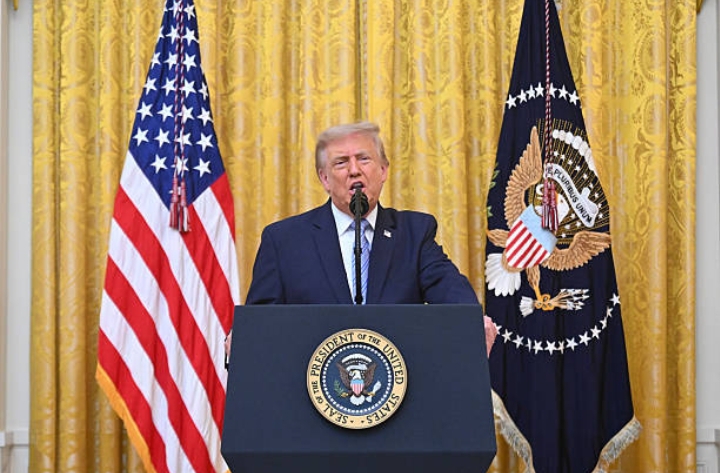
Defense supply-chain waiver rules just got dramatically tighter. President Donald Trump signed an executive order Monday making it significantly harder for U.S. defense contractors to obtain waivers allowing them to buy critical minerals and other materials from China and other prohibited foreign suppliers, according to Reuters, marking the administration’s latest move to cut the Pentagon’s reliance on overseas supply chains for weapons production. Under the new framework, defense contractors can no longer justify sourcing from a banned country simply by showing it’s the cheapest or easiest option — they now have to prove they searched for alternatives, disclose exactly where their materials come from, and lay out a concrete plan to reduce dependence on prohibited suppliers.
What the Defense Supply-Chain Waiver Order Actually Does
The order directs the Pentagon to overhaul how it evaluates waiver requests from contractors seeking exceptions to laws that already prohibit sourcing certain materials from adversarial nations. Companies seeking a waiver will now need to prove they searched for alternatives, disclose the origins of their materials, and provide a plan to reduce reliance on prohibited suppliers, rather than simply showing that a Chinese supplier was the easiest or cheapest option. Contractors who fail to meet the new documentation standard face real consequences, not just paperwork delays.
Mapping the Defense Industrial Base’s Lower Tiers
Beyond tightening waiver requirements, the executive order directs the Pentagon to develop rules requiring contractors to map critical defense supply chains from raw materials through finished military products, identifying the origins of minerals, components, software and other inputs used in designated weapons systems and extending government visibility beyond prime contractors down to lower-tier suppliers. Officials say that visibility gap is the central problem the order is meant to fix — the government currently has a much clearer picture of the companies building finished weapons than of the smaller vendors feeding those companies raw materials.
Why the White House Calls This ‘Battlefield Preparation’
“This is not paperwork. It is battlefield preparation,” Navarro said, arguing the Pentagon needs to know whether missile systems or other military platforms depend on foreign-controlled suppliers before a conflict begins. Navarro described the scale of the problem in stark terms, noting that a finished weapons platform is the end product of thousands of components sourced through supply chains that stretch around the globe.
Ending What Navarro Calls the Defense Waiver ‘Racket’
Navarro said the order will “end the waiver racket” that has allowed federal defense contractors and subcontractors to bypass existing laws prohibiting the sourcing of certain materials from China, Russia, Iran and North Korea, and confirmed the order takes effect January 1, 2027. He rejected concerns that U.S. industry may not yet produce enough of the covered materials to fully replace foreign suppliers, arguing the administration is actively working to expand domestic production of rare earths and other sensitive inputs so the country becomes less dependent rather than simply cut off from supply.
Contractors Face Competing Pressure to Scale Up and Cut Ties With China
The order arrives as the Pentagon simultaneously pushes major contractors like Lockheed Martin and Boeing to rapidly expand weapons production, even as persistent vulnerabilities remain in the supply chains feeding the U.S. military, with many critical minerals and processed materials used in missiles, aircraft and other advanced systems still reliant on Chinese suppliers. That leaves contractors squeezed between two demands moving in opposite directions: ramp up output for the Pentagon on tight deadlines, while simultaneously proving they are weaning themselves off the very Chinese-linked suppliers that have historically kept costs down and production on schedule.
Part of a Broader Pattern of ‘Buy American’ Enforcement
Monday’s order builds on a string of similar actions this year. In May, Trump publicly pressed federal agencies to prioritize American-made products and close what he called waiver loopholes, referencing an earlier executive order cracking down on fraudulent “Made in America” labeling. The administration has also moved this year to limit stock buybacks and dividend payouts at major defense contractors, arguing that Pentagon spending should be redirected toward expanding plant capacity rather than rewarding shareholders — a shift one Pentagon spokesperson framed as an obligation to “warfighters, not Wall Street.” Together, the moves signal a sustained push to reshape how the defense industrial base is funded, sourced and held accountable.
Key Facts: The Defense Supply-Chain Waiver Order
- Trump signed the executive order on Monday, July 20, 2026.
- It tightens waiver rules covering materials sourced from China, Russia, Iran and North Korea.
- Contractors must now prove they searched for alternatives before requesting a waiver.
- Companies must disclose the specific origins of their materials.
- A plan to reduce reliance on prohibited suppliers is now required for waiver approval.
- Non-compliant contractors risk losing procurement opportunities.
- The Pentagon is directed to map lower-tier suppliers across major weapons programs.
- Officials say defense supply chains can run five to six tiers deep, beyond current government visibility.
- The order takes effect January 1, 2027.
- It follows earlier 2026 actions on “Buy American” enforcement and defense-contractor profit rules.
What’s Next for Defense Contractors
Defense contractors now have until the January 1, 2027 effective date to build out the documentation and sourcing-alternative processes the order demands. Industry analysts have previously flagged that similar “Buy American” pushes can raise costs on materials like steel, aluminum and specialty alloys before domestic alternatives are fully scaled up, and some contractors have described earlier White House orders on defense-industry practices as legally ambiguous and short on implementation detail. The Pentagon has not yet released the specific rules contractors will need to follow to map their lower-tier suppliers, meaning much of the order’s real-world impact will depend on regulations still to come.
Trump signs an order targeting fraudulent “Made in America” labeling under EO 14392.
Trump publicly presses federal agencies to close “waiver loopholes” and prioritize American-made goods.
Administration issues an order limiting stock buybacks and dividends at major defense contractors.
Trump signs the executive order tightening defense supply-chain waiver rules, effective Jan. 1, 2027.
For the full text of the administration’s announcement, see Reuters’ coverage of the executive order.